



A pergola over a seating circle
A treated timber pergola over a round paved seating area, the lawn brought up to its edge.
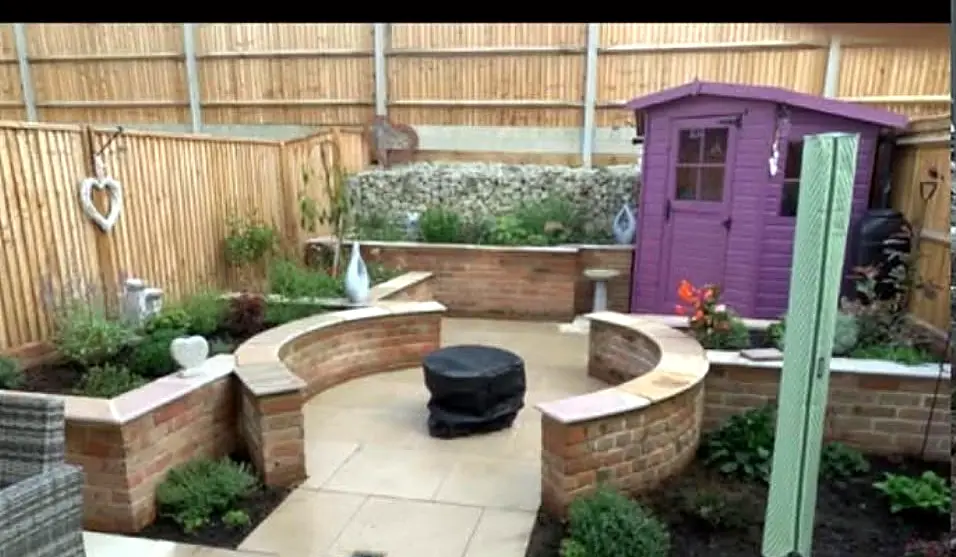

Gardens cleared and rebuilt: sleepers, brick seating, pergolas and hedges.
Find us and review us on
A treated timber pergola over a round paved seating area, the lawn brought up to its edge.

Old grey sleepers out, new treated ones in, the raised slab held square.

A round sandstone patio set into the grass with a block edge.
An overgrown leylandii hedge spilling onto the pavement, cut back and squared off.


2 small tree jobs completed today for to regular customers all waste removed and recycledPro Build, job notes, 3 October 2026


This was the second project completed by Kane. A new 38sqm patio, and all I can say it was completed in good time and looks fantastic. As always with Kane, he (and his team) worked quickly and efficiently. Great comms and time keeping. I can wholeheartedly 100% recommend Kane and his company and I will use him for all future jobs.

Clearing first, then levels, then the hard parts. Paving and walls cost more per square metre than planting; sleepers are the cheaper way to build structure.
A garden job is usually several jobs at once, and the price is the sum of them plus what has to be cleared first. Clearing is where people underestimate: an overgrown garden, an old shed, broken paving and a pile of rubble behind the fence all have to be dug out, loaded and taken away, and our job notes make a point of saying where the waste went every time. Levels come next. A sloping garden needs something to hold each level, whether that is a sleeper wall, a brick wall or rock face gravel boards under a fence, and the more soil that has to move, the more days it takes. Then the hard parts, which cost more per square metre than anything planted: paving, seating walls, steps and edging. Timber is the cheaper way to build structure, with sleepers and pergolas, and brick the longer-lasting one. Planting, turf and gravel finish it off. Hedge and small tree work is priced by size and by how much there is to take away, and protected trees or birds nesting in a hedge can change when the work can be done. The quickest start is a few photos of the garden as it is and a line on what you want from it.
Hedges do not need planning permission as such. If a planning condition or a covenant restricts planting, for example on open plan estates or where a driver's view could be blocked, you may need planning permission or other consent.
Source: Fences, gates and garden walls: Planning Permission, Planning Portal (PortalPlanQuest Ltd, joint venture of TerraQuest and MHCLG)
Under the Wildlife and Countryside Act 1981 it is an offence to intentionally take, damage or destroy the nest of any wild bird while it is in use or being built.
Source: Wildlife and Countryside Act 1981, section 1 (Protection of wild birds, their nests and eggs), legislation.gov.uk (The National Archives)
The RSPB recommends cutting hedges only between 1 September and 28 February, because March to September is when birds are most likely to be nesting. It still advises checking for nests then, as some birds start early or breed late. Legally you can cut year-round as long as no active nests are moved or damaged.
Source: Top tips to help nesting birds, RSPB
A Tree Preservation Order means you cannot cut down, top, lop, uproot, wilfully damage or wilfully destroy the tree without the council's written consent. The government's view is that cutting the roots also needs consent.
Source: Tree Preservation Orders and trees in conservation areas, Ministry of Housing, Communities & Local Government (GOV.UK)
For a tree in a conservation area that has no Tree Preservation Order, you must give the council 6 weeks' notice (a section 211 notice) before certain work, unless an exception applies. The work can go ahead sooner if the council gives consent.
Source: Tree Preservation Orders and trees in conservation areas, Ministry of Housing, Communities & Local Government (GOV.UK)
We do hard landscaping and garden makeovers: clearing an overgrown garden, holding a slope with sleepers or brick, laying a patio and a path, turf or artificial grass, raised beds, pergolas and hedges cut back. Send the form with photos of the garden as it is now.


